
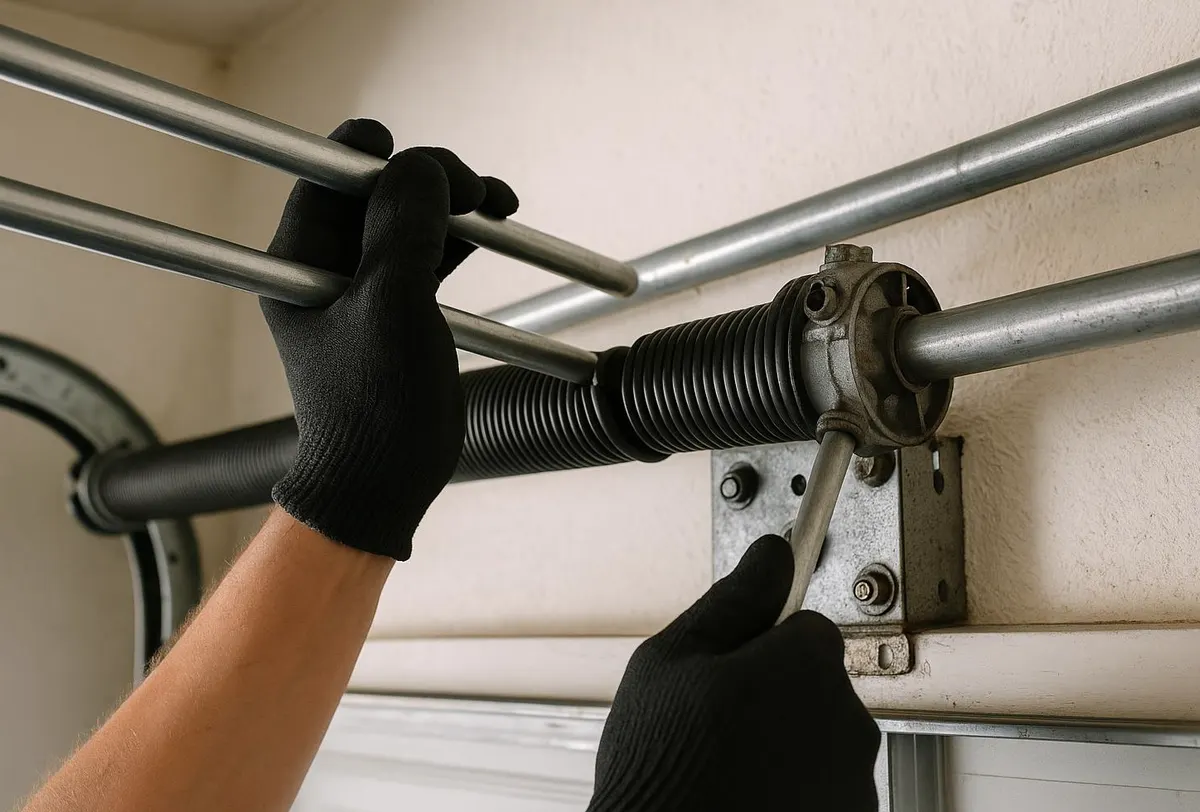
The Mistake Almost Everyone Makes
Most homeowners treat a closed garage door as a locked door. It isn't. Closing the door feels like enough — you watch it come down, the opener light goes dark, and the job feels done. Engaging an actual lock feels redundant, like locking a door that's already shut. That assumption is exactly what makes garage doors such an easy target: a closed panel with no secondary lock can often be opened in under a minute by someone who knows where to push.
How Burglars Actually Get In
Forget the movie version of someone prying a door open with a crowbar in plain view. Most garage break-ins are quiet and fast, using a few well-known tricks:
- The coat-hanger trick: On older doors, a thin wire slipped through the gap at the top can snag the emergency release cord and pop the trolley loose, letting the door be lifted by hand. This works especially well on original doors that haven't been updated with a shielded release.
- Code grabbing: Older fixed-code openers broadcast the same signal every time. A cheap code-grabbing device can capture it and replay it later. If your opener still uses dip switches instead of rolling codes, this is a real risk, not a theoretical one.
- Forcing the track: Garage door tracks aren't meant to resist force. A door with loose fasteners or a track that's already slightly bent can be pried outward just enough to disengage the rollers.
- The visible remote: An opener clipped to a visor or a keychain with your address on it, left in an unlocked car in the driveway, hands over direct access with zero effort.
- The weak link behind the door: Even when the garage door itself holds, the door connecting the garage to the house is often older, hollow-core, and secured with a cheap knob lock — because homeowners assume the garage already did the work of keeping people out.
Why It's a Bigger Problem Here
Dillsburg's winters add a layer most people don't think about. Freeze-thaw cycles swell and contract metal tracks, and road salt tracked in on tires accelerates corrosion on hardware, hinges, and fasteners. A track that's slightly warped from a hard winter isn't just a noisy, sticky nuisance — it's a weak point that makes forced entry easier. Add in the area's stock of older homes with original doors and original openers, and you've got a lot of garages running hardware that was never designed with modern security threats in mind. A door that's 20-plus years old likely has a fixed-code opener, a basic release mechanism, and a track that's seen a few decades of salt and ice.
Habits That Cost Nothing
- Cover the glass. If your garage door has windows, frost or cover them. A clear view in tells a burglar whether your car is gone and what's worth taking.
- Keep the remote off your keychain. Use a keypad entry code instead, or at minimum keep the remote in the house, not the car.
- Lock the service door. Treat the side door to the garage like a front door — deadbolt, not just a knob lock.
- Close the garage before you forget. Make it an exit-the-driveway habit, especially during the dark winter evenings when the door can sit open longer than anyone notices.
- Don't advertise vacations. A garage door open for days while you're away is a louder signal than most people realize.
Hardware That Actually Stops a Break-In
- Rolling-code openers. If your opener is more than 10–15 years old, replacing it with a rolling-code model (which generates a new code every time you press the button) shuts down code-grabbing entirely.
- A shielded or relocated emergency release. A cover over the release cord, or a release that requires a key-turn from outside, defeats the coat-hanger trick.
- A track-mounted slide lock or padlock bracket. These physically block the door from being forced up even if the opener is bypassed — cheap, simple, and effective.
- Reinforced tracks and hardware. Replacing corroded or bent track sections removes the weak point that makes forcing a door easier in the first place.
- A real deadbolt on the interior service door. This is the backstop if the garage is ever breached.
When to Call Dillsburg Garage Door
If your opener still uses a plain remote with dip switches, if the emergency release cord hangs exposed near the top of the door, or if the tracks show visible rust, bowing, or loose brackets after a rough winter, it's worth having it looked at before it becomes an easy target. We handle Garage Door Opener Services for homeowners upgrading from older fixed-code systems to rolling-code models, and we do full Garage Door Maintenance visits that check tracks, rollers, and hardware for the kind of wear that freeze-thaw cycles and road salt cause over a Pennsylvania winter. If something's already been forced or damaged, we also run emergency service calls so you're not left with an unsecured garage overnight.
If any of this sounds like your current setup, call Dillsburg Garage Door for a straightforward inspection and honest pricing — we serve Dillsburg, PA and the surrounding communities, and same-day help is available when you need it fast.