
What Waiting Another Season Actually Costs
Here's the scenario that plays out every year: one spouse wants the sagging, drafty original garage door replaced before winter. The other says "let's wait until spring, it's not worth the hassle of permits and HOA approval." Then a nor'easter rolls through, the door that's been limping along finally buckles under wind pressure or a frozen track snaps a cable, and now you're paying emergency rates for a rushed installation anyway—with no time to compare door styles, materials, or get the paperwork right. Putting off the permit-and-rules conversation doesn't avoid the cost. It just moves it to the worst possible moment, in the worst possible weather.
Do You Actually Need a Permit?
This is usually the first disagreement, and the honest answer is: it depends on your municipality and the scope of the work. Many areas require a permit for structural changes—widening an opening, replacing the header, or altering the framing—but not for a straightforward swap of an existing door in the same size and location. Some jurisdictions also tie permit requirements to the value of the work or whether electrical changes (like a new opener circuit) are involved.
The point of contention in most households isn't whether permits exist—it's who's responsible for pulling one. Reputable installers typically handle this as part of the job when it's required, and they'll know based on your specific opening whether it's a simple replacement or a structural change that triggers review.
What Your HOA Can (and Can't) Control
HOAs commonly regulate appearance: door color, panel style, window inserts, and sometimes material (wood-look versus plain steel, for example). What they typically can't override are building codes or safety requirements—an HOA can tell you the door has to match a certain aesthetic, but it can't legally require you to install something that fails wind-load standards for your region.
If your HOA has an architectural review process, the smart move is to submit your door selection—style, color, material—before you order anything. Approval delays are far more common when someone orders first and asks forgiveness later, and that's the version of this argument nobody wins.
Wind-Load Codes and Why They Matter Here
Wind-load ratings tell you how much pressure a door can withstand before it fails—both wind pushing against it and the suction effect of a wind pulling it outward. This matters more than people think in a region that sees nor'easters and heavy wind-driven precipitation. A door's rating is a function of the materials, the reinforcement (horizontal struts on the back of the panels), and how well the track and anchoring hardware are installed.
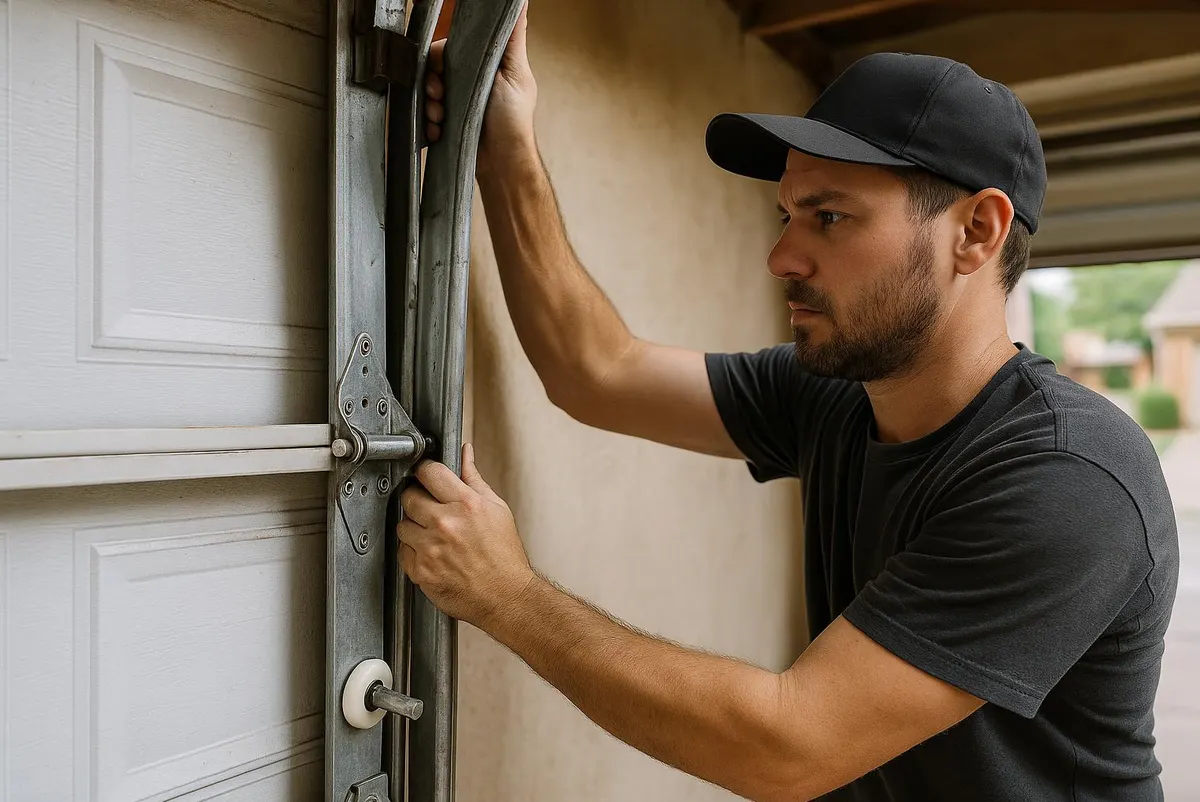
Here's where older housing stock comes into play: a lot of original garage doors in this area were installed decades before current wind-load standards existed. They may look fine, but the track hardware, header attachment, and panel reinforcement often don't meet what a code-compliant replacement would require today. If you're replacing a door that old, you're not just swapping the door—you may be upgrading the entire opening to current standards, which is exactly the kind of work that can require a permit.
The Trade-Offs Worth Discussing Before You Buy
- Cost range: A code-compliant, wind-rated replacement door (nationally) typically runs somewhere between $900 and $3,000 depending on material, insulation, and reinforcement—plus installation.
- Timeline: HOA approval and permit review can add one to several weeks, depending on your area and board meeting schedule. Factor that in if you're hoping to have a new door before the coldest stretch of winter.
- Style limits: HOA-approved colors and panel styles may narrow your options more than you'd like—better to know that before you fall in love with a door that won't pass review.
When to Call Dillsburg Garage Door
If you're not sure whether your opening needs structural work, or you want a straight answer on what a code-compliant, wind-rated door looks like for your home, that's the conversation to have before you order anything. We handle garage door installation and can walk you through what a replacement involves for your specific opening—including whether your existing track and header meet current standards. If your current door is already showing signs of stress—sagging, misaligned panels, or trouble from the freeze-thaw cycle—our garage door repair service can also buy you time to make the replacement decision without rushing it.
If you're weighing a replacement before winter sets in, call Dillsburg Garage Door serving Dillsburg, PA and the surrounding area. We'll give you a straight answer on what your door needs—permit or no permit.